Choosing an Air Purifier for Bathroom Mold: What Actually Helps
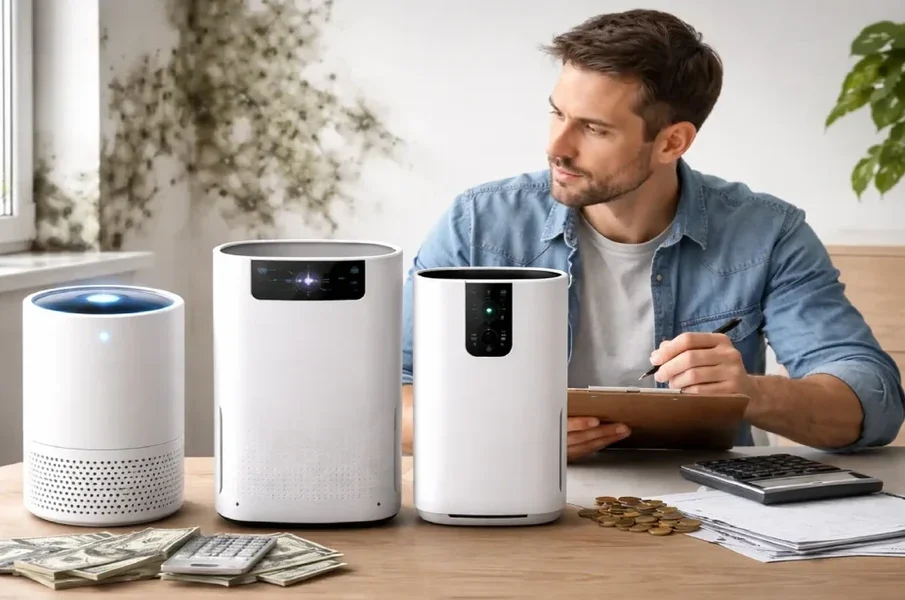
What an Air Purifier Can and Cannot Do for Bathroom Mold
An air purifier in a bathroom with active mold growth does two things: it captures airborne mold spores before they settle and colonize new surfaces, and it captures the spore load produced by existing mold growth so that airborne concentration in adjacent spaces is lower. What it cannot do is stop active mold from growing on surfaces, reduce the moisture conditions that allow mold to thrive, or remediate existing surface growth.
The implication is that an air purifier is a useful tool in a mold management strategy but cannot be the only tool. Persistent bathroom mold growth requires addressing the underlying moisture source – inadequate ventilation, water infiltration, chronic high humidity – before air purification can be fully effective. A bathroom air purifier managing spore load while active mold continues growing on tile grout is treating the symptom without resolving the cause.
The moisture source question is where most bathroom mold problems start and where solutions need to begin. Inadequate exhaust fan capacity or a fan that is not used consistently is the most common cause. A bathroom exhaust fan sized for the space and run for 15 to 20 minutes after showering removes moisture before it can condense on surfaces. Adding an air purifier to a bathroom that lacks adequate ventilation is the wrong order of operations.
What to Look For in a Bathroom-Appropriate Unit
Choosing an air purifier for bathroom mold requires attention to humidity tolerance that indoor air purifiers are not always designed for. Bathrooms cycle through high-humidity conditions during and after showering, and electronics in these units need to tolerate that environment without damage. IP ratings – Ingress Protection standards – classify how well a device handles moisture. An IP44 rating handles splashing water from any direction; an IP65 rating handles water jets. Positioning any purifier away from direct splash and checking humidity tolerance specifications before purchase prevents premature failure.
Mold spores range from 3 to 40 microns in diameter – within the capture range of both True HEPA filtration and quality electrostatic precipitation technology. The filtration specification is not the limiting factor for mold spore capture; room size matching and continuous operation matter more. A unit sized appropriately for the bathroom’s cubic footage and running continuously processes room air frequently enough to capture spores before they settle.
The EPA Indoor Air Quality recommends that indoor mold remediation address moisture sources first and air quality improvement second – consistent with the sequence described above. Their guidance on bathroom mold specifically identifies ventilation improvement as the primary intervention and air filtration as a supporting measure.
The Complete Bathroom Mold Strategy
A complete bathroom mold management strategy has four components: adequate ventilation, moisture reduction on surfaces, remediation of existing visible growth, and air filtration for ongoing spore management. Each component addresses a different aspect of the problem; none is sufficient on its own.
Ventilation improvement is the highest-leverage first step. A bathroom exhaust fan sized at one CFM per square foot of bathroom floor area, run consistently during and for 15 to 20 minutes after showering, removes the moisture that makes mold growth possible in the first place. For bathrooms with existing inadequate fans, replacement is a straightforward project with a meaningful impact on long-term mold management.
Once ventilation is adequate and existing surface growth has been treated, an air purifier running continuously in or adjacent to the bathroom captures the residual airborne spore load that exists even in well-maintained bathrooms. At this stage of the strategy, the air purifier is providing ongoing maintenance rather than trying to compensate for unaddressed moisture problems – the role where it is most effective.